Plan with confidence
Renovation handover: what to check and keep
Use a room-by-room handover process to record unfinished details, understand your new systems and collect the documents needed to care for your home.
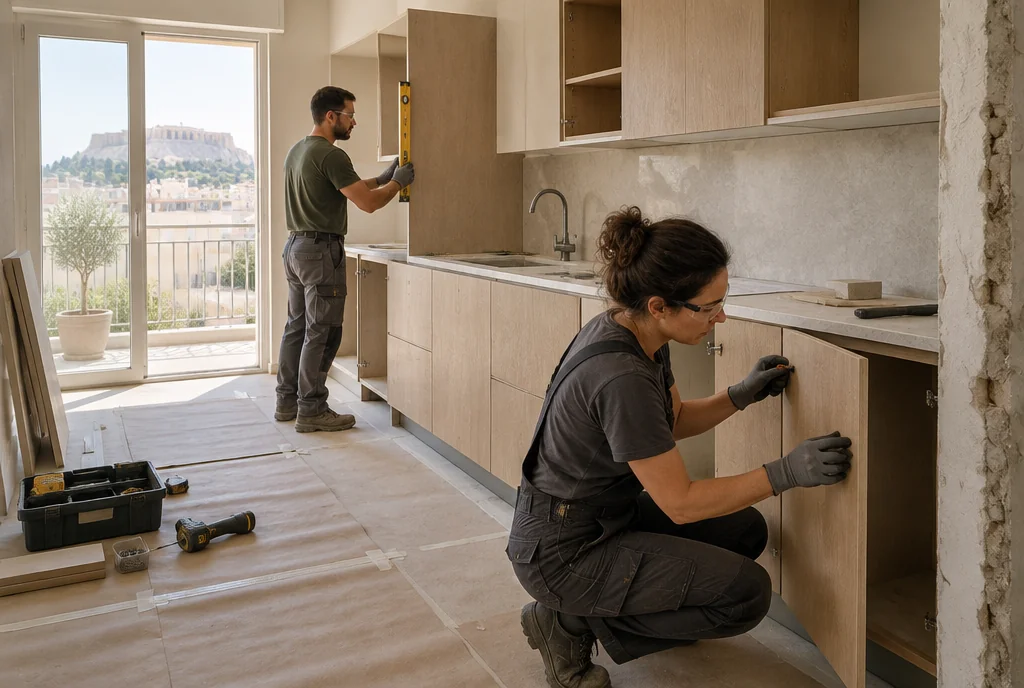
The day a renovation looks finished is not necessarily the day it is ready to hand over. Handover should confirm operation, identify remaining work and explain maintenance. Treat it as a planned appointment with a written record, rather than a quick walk-through between deliveries.
Inspect one room at a time
Bring the agreed scope and finish schedule. Check doors, drawers, handles, visible surfaces and fittings in normal use. Record each snag with a photograph, location, description and responsible person. Distinguish unfinished work from a new preference. If you cannot assess a technical item, ask the appropriate professional to check it.
Ask for demonstrations
Have the team demonstrate controls, shut-off points and equipment settings. Understand how to isolate water, operate ventilation and access filters without dismantling furniture. Relevant electrical, plumbing and heating tests belong with qualified professionals. Do not accept a casual demonstration as a substitute for required certification or commissioning records.
Collect the care information
Request product references, warranties, manuals, paint colours and instructions for sensitive surfaces. Save photographs of concealed service routes and final drawings where available. Keep spare tiles or labelled touch-up materials if supplied. A named product and batch reference is much more useful than “the beige tile” when a repair is needed later.
Close the remaining list
Agree dates for corrections and a method for confirming completion. Keep the snag list separate from any future improvement ideas. Discuss payment milestones against the written contract rather than an informal expectation. Before moving furniture in, photograph the completed rooms; the record will help you distinguish later wear from outstanding defects.
Your practical checklist
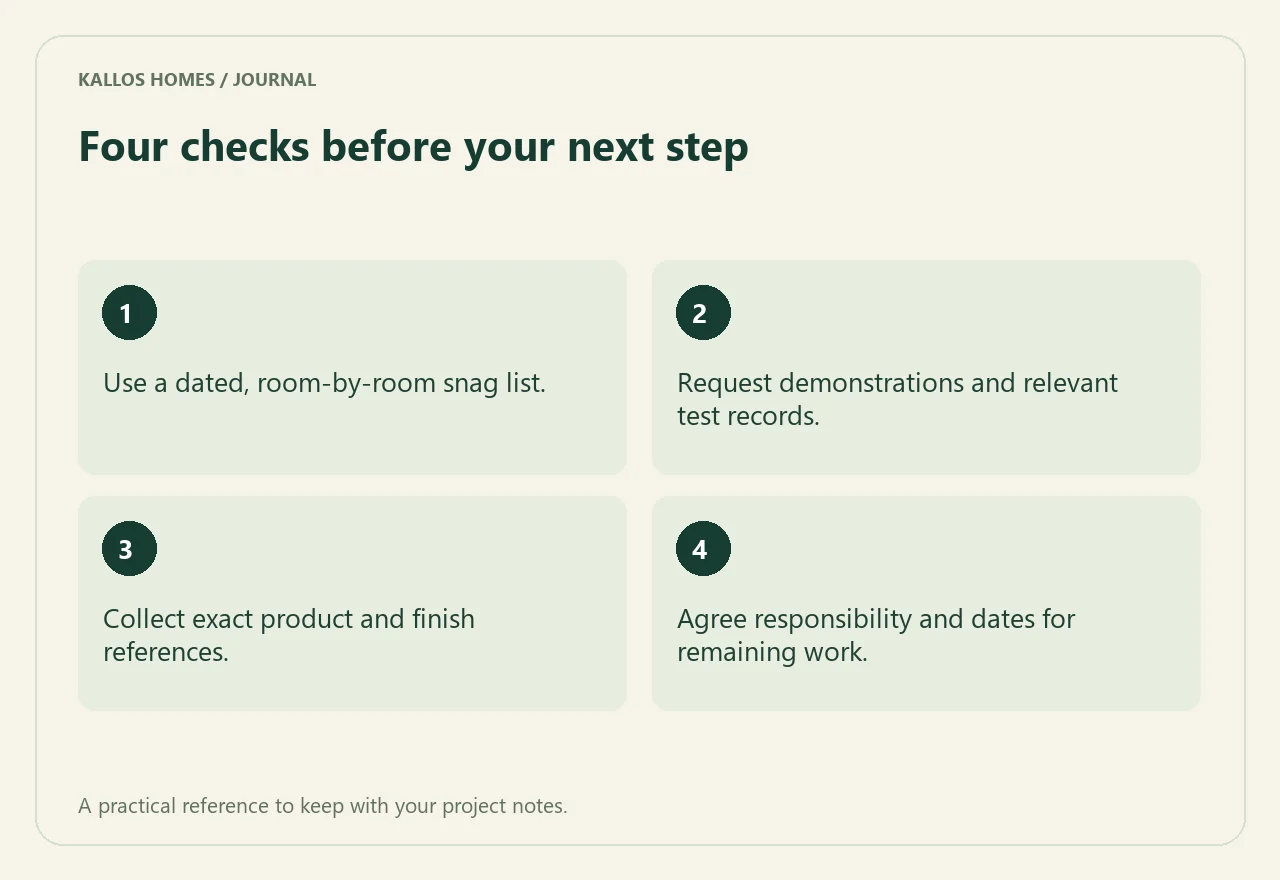
- Use a dated, room-by-room snag list.
- Request demonstrations and relevant test records.
- Collect exact product and finish references.
- Agree responsibility and dates for remaining work.