Outdoor living
A simple maintenance calendar for your Greek home
Turn manuals and handover records into a practical seasonal calendar for inspections, servicing and care, especially when the home is used intermittently.

A renovated home still needs attention. The easiest maintenance plan is one you can actually follow: a short calendar linked to the installed products, local exposure and occupancy. Use the manufacturer’s requirements as the starting point rather than copying a universal annual checklist.
At a glance: Build a maintenance calendar from the home's installed systems and observed condition. Assign responsibility, record evidence and follow product-specific instructions instead of using a generic date list as a substitute for inspection.
Create a home information folder
Keep equipment references, manuals, warranties, installer contacts, paint codes and relevant drawings together. Add dates for installation and servicing. A shared digital folder can help if more than one person manages the property, but keep personal access information secure and separate from ordinary maintenance notes.
Plan around seasonal use
Before periods of heavy cooling or heating, arrange the servicing required for your equipment. Before expected wet weather, have appropriate drainage and exterior checks carried out safely. If the property is used for holidays, plan an opening check before guests arrive and a closing routine after departure. Follow system-specific instructions for long absences.
Distinguish observation from specialist work
You can record visible staining, loose handles or changes in operation without dismantling equipment. Electrical work, roof access, structural concerns and technical servicing require suitable professionals. Keep a list of who handles each issue. Promptly reporting a small change can be more useful than attempting a repair you cannot assess.
Review after the first year
Compare the planned routine with what the house actually needed. Update intervals according to professional and manufacturer guidance, not assumptions. Keep receipts and photographs of repairs. A clear record supports future troubleshooting and helps the next person understand the building without starting from scratch.
Start with an equipment and surface inventory
List the systems, finishes and external elements that need attention, together with their manuals and service contacts. Include items that are easy to forget because they sit behind a panel or above eye level. Record the exact model where relevant so maintenance advice refers to the installed product.
Separate tasks a resident can appropriately perform from work requiring a qualified professional. Follow the relevant instructions and do not turn a household checklist into an invitation to access roofs, electrical equipment or other unsuitable work areas. The calendar should route each task to the right person.
Use dates and observations together
Schedule manufacturer-specified servicing and agreed professional checks, then leave room for observations between visits. A new mark, unusual noise or difficult operation should be recorded when noticed rather than ignored until a convenient annual date. Ask the relevant specialist how urgent an unfamiliar issue is.
Keep notes factual: location, date, conditions and a photograph where useful. Avoid recording an unverified diagnosis as though it were established. Clear observations help the technician prepare and make it easier to see whether a later visit resolved the original complaint.
Assign an owner to each task
Write who arranges the appointment, who provides access and where the result is stored. In a shared or seasonal home, distinguish private tasks from matters managed through the building's arrangements. A reminder with no responsible person can recur indefinitely without anything being completed.
For work performed by others, request a short completion note and any next action. Keep receipts, updated settings and replacement details together. If a task cannot be completed, record why and agree the next step rather than marking it finished merely because someone attended.
Review the calendar after changes
Add new equipment and remove obsolete entries after renovation or replacement. Update access information and service contacts. A calendar copied from the previous owner may refer to systems that no longer exist or omit newly installed items whose care matters from the beginning.
At a periodic review, look for recurring issues and discuss them with the appropriate professional. Repeated repairs at the same location may justify investigation rather than another identical treatment. The most useful maintenance record tells the story of the actual home and supports decisions, rather than simply accumulating checked boxes.
Frequently asked questions
Should every task happen once a year?
No. Use the product instructions, professional advice, usage and observed condition to establish appropriate timing. A universal annual schedule is not suitable for every item.
What should a caretaker record?
The task, date, observed condition, action taken and anything still unresolved, with relevant photographs or service documents. Avoid replacing evidence with an assumed diagnosis.
Your practical checklist
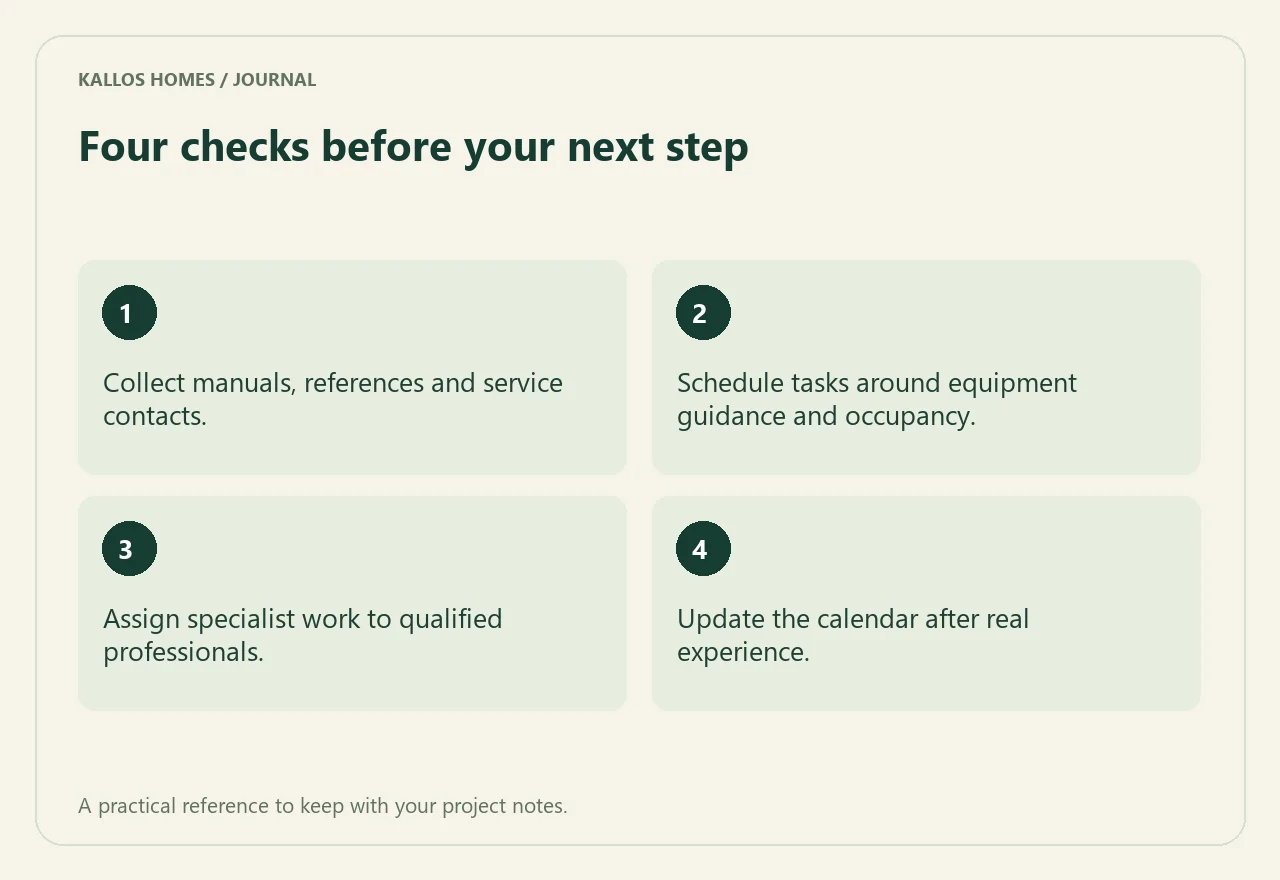
- Collect manuals, references and service contacts.
- Schedule tasks around equipment guidance and occupancy.
- Assign specialist work to qualified professionals.
- Update the calendar after real experience.