Mediterranean interiors
Reversible upgrades for a rented apartment: a practical plan
Improve a rented apartment through layout, lighting and portable storage while checking permissions, surface compatibility and how changes will be removed.
A rental home can feel more personal without treating every frustration as a construction project. Start with the furniture arrangement and everyday routines, then consider movable items and carefully assessed surface changes. Reversible should mean there is a realistic removal and restoration plan, not simply that a product is advertised as temporary.
At a glance: Start with rearrangement, portable lighting and storage. Check the tenancy agreement and obtain any required permission before changing surfaces or fixed elements; document the original condition.
Define the problem and the length of use
List what makes the apartment inconvenient: an awkward work corner, insufficient task light, clutter near the entrance or furniture that blocks a door. Rank the problems by daily impact. A new decorative finish may be appealing while leaving the most frustrating part of the room unchanged.
Consider how long you expect to use the home without relying on a guaranteed moving date. Prefer purchases that can serve another layout where practical. Include removal, transport and restoration in the decision, not just the price of installing an improvement today.
Record the existing condition and permission
Keep clear photographs of the relevant surfaces and fixed elements before making changes. Read the agreement and discuss proposed alterations with the appropriate person. Obtain required approval in writing, including expectations for removal or making good. This guide does not determine the legal rights or obligations of a particular tenancy.
Separate movable purchases from interventions in the property. Drilling, coating, replacing fittings or adding fixed wiring can raise different issues from bringing in a floor lamp. Where terms are unclear, resolve them before work rather than assuming the word temporary makes every modification acceptable.
Try the furniture layout first
Move existing pieces or test alternatives with a full-size outline. Protect door movements and routes to windows. A smaller desk or differently positioned table may solve the problem without altering the apartment. Check where any displaced furniture will go, particularly if it belongs to the property owner.
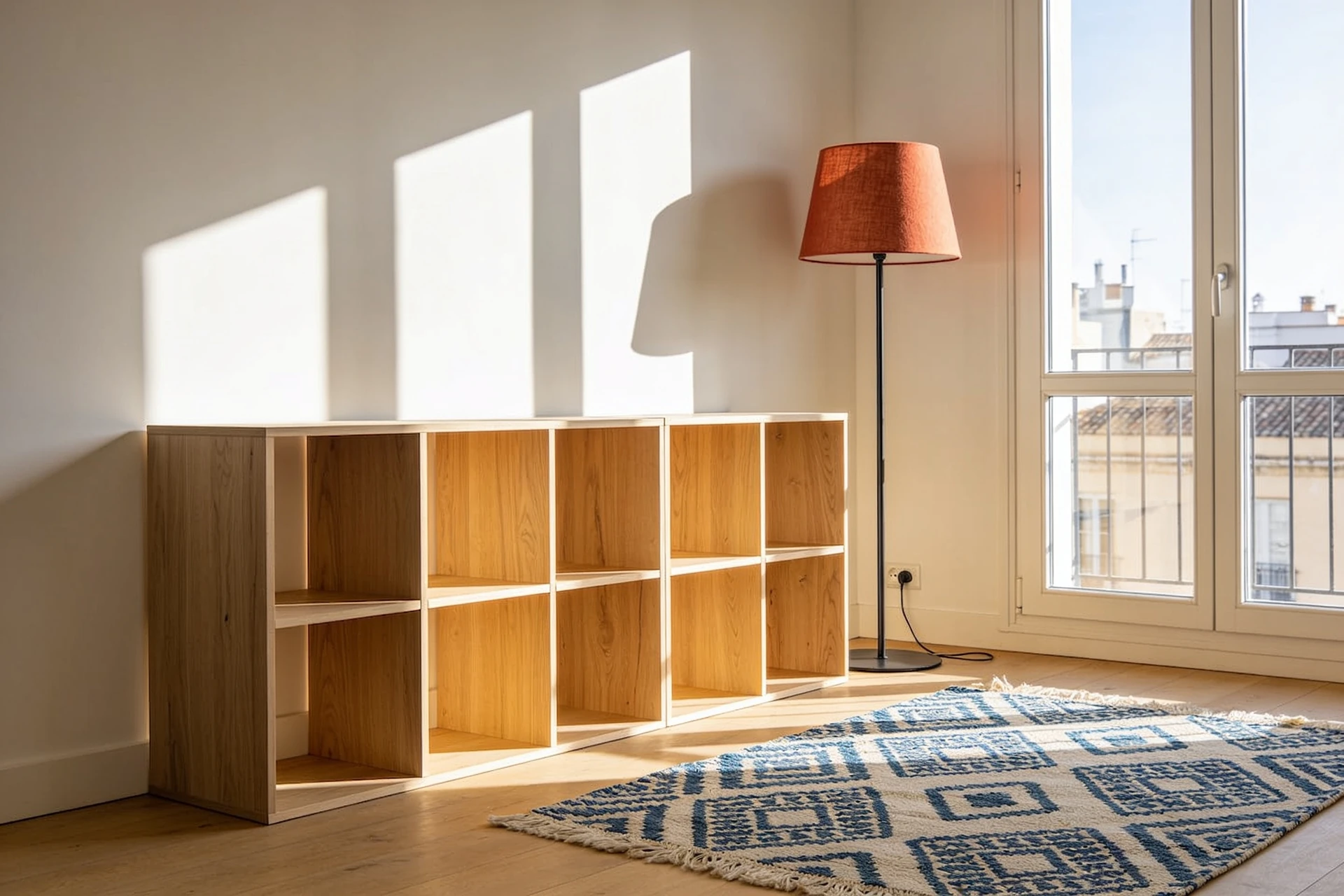
Use storage close to the activity it supports and measure actual contents. Follow the manufacturer's securing requirements for furniture; portability does not mean a tall unit can be left unsecured. Discuss any necessary fixing and the actual wall construction with the relevant parties before purchase.
Use portable light and textiles deliberately
A suitable task lamp can improve a specific activity without changing fixed wiring. Plan cables out of walking routes and follow equipment instructions. Test curtains or rugs for the actual space, including door movement, cleaning and the way they sit with existing fittings. Avoid purchases based only on a generic room photograph.
If a window covering requires a new support, check compatibility, load and permission. A no-drill product still has installation requirements. Ask what surfaces or frames it can be used on and how it is removed. The absence of a drill does not guarantee the absence of damage.
Treat adhesive products as surface-specific
Read the exact product instructions and the requirements of the existing finish. Ask whether application and removal are suitable for the surface and condition. Do not assume peel-and-stick films or hooks are harmless to every paint, veneer or tile. Test only where appropriate and permitted, following the instructions.
Avoid using a decorative film to cover a defect that needs repair or to hide a condition that should be reported. If you choose an approved temporary treatment, retain the product details and removal instructions. Plan what happens at edges, fittings and cleaned areas before covering a large surface.
Keep an exit plan from the beginning
Store original parts safely and label where they belong when an approved replacement is made. Keep permissions, receipts and installation notes together. Before moving out, review each change against the agreed restoration requirements rather than discovering an unfamiliar removal task on the last day.
Choose improvements that make everyday life better with a manageable level of commitment. A coherent arrangement of useful movable pieces can feel more personal than many surface treatments. Review the apartment after the first changes and invest further only where an unresolved practical need remains.
Compare the level of commitment
| Change | Main check | Removal plan |
|---|---|---|
| Furniture rearrangement | Routes and ownership of items | Return agreed layout |
| Portable lighting | Use, cables and product instructions | Pack with accessories |
| Approved wall fixing | Permission and suitable installation | Agreed making good |
| Adhesive finish | Surface compatibility and approval | Manufacturer's removal method |
Frequently asked questions
Are removable hooks always damage-free?
No universal promise applies to every surface and condition. Check the exact product instructions and the existing finish, and obtain any required permission.
Can I replace a light fitting myself?
Have fixed electrical work handled by an appropriately qualified electrician and resolve permission first. Portable lighting may meet the need without that intervention.
What should I buy first?
Address the highest-impact practical problem. A better layout, useful lamp or correctly sized storage piece may offer more value than changing a large decorative surface.
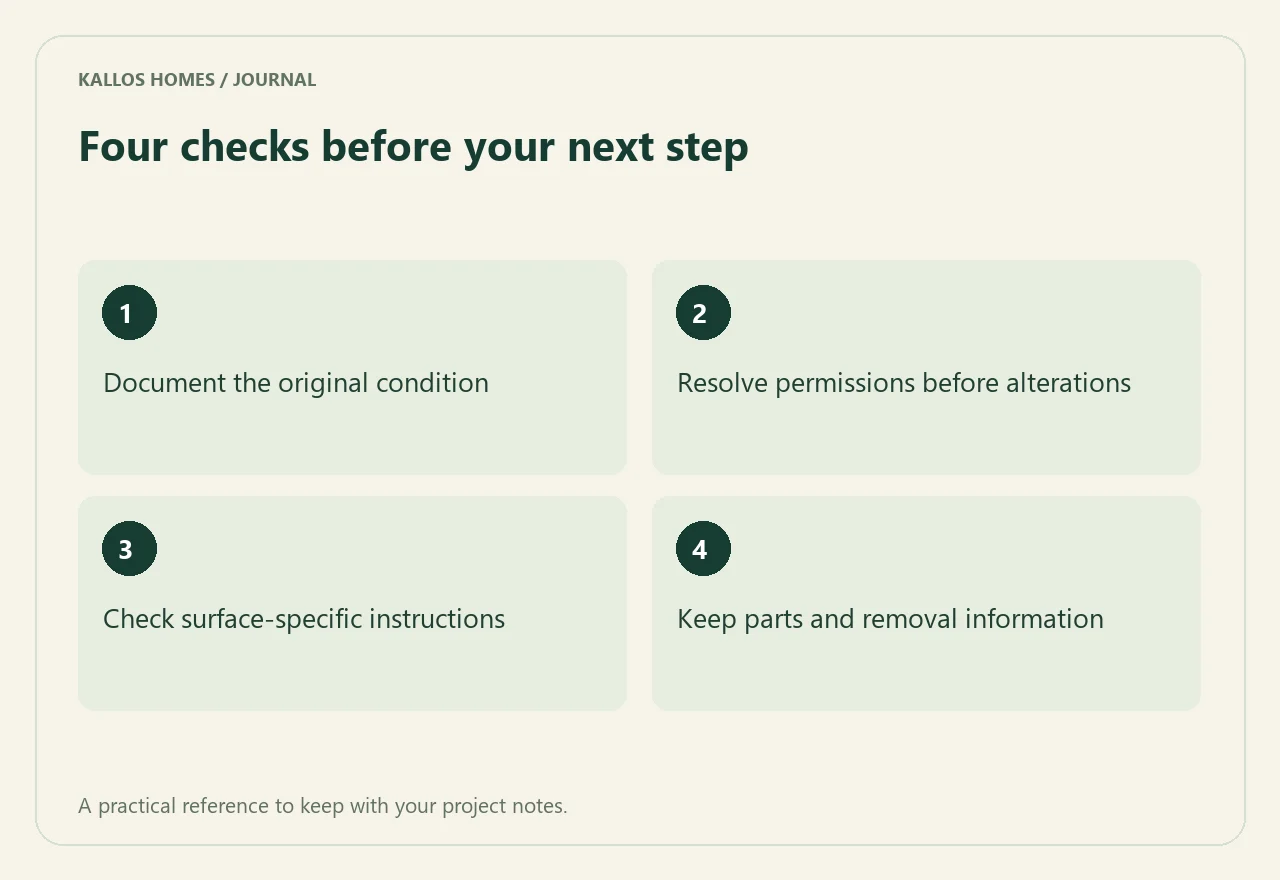
Your practical checklist
- Document the original condition
- Resolve permissions before alterations
- Check surface-specific instructions
- Keep parts and removal information