Outdoor living
Outdoor furniture for a small Greek balcony: what to compare
Choose balcony furniture by occupied footprint, exposure, care, storage and delivery, with a layout that remains practical throughout the year.
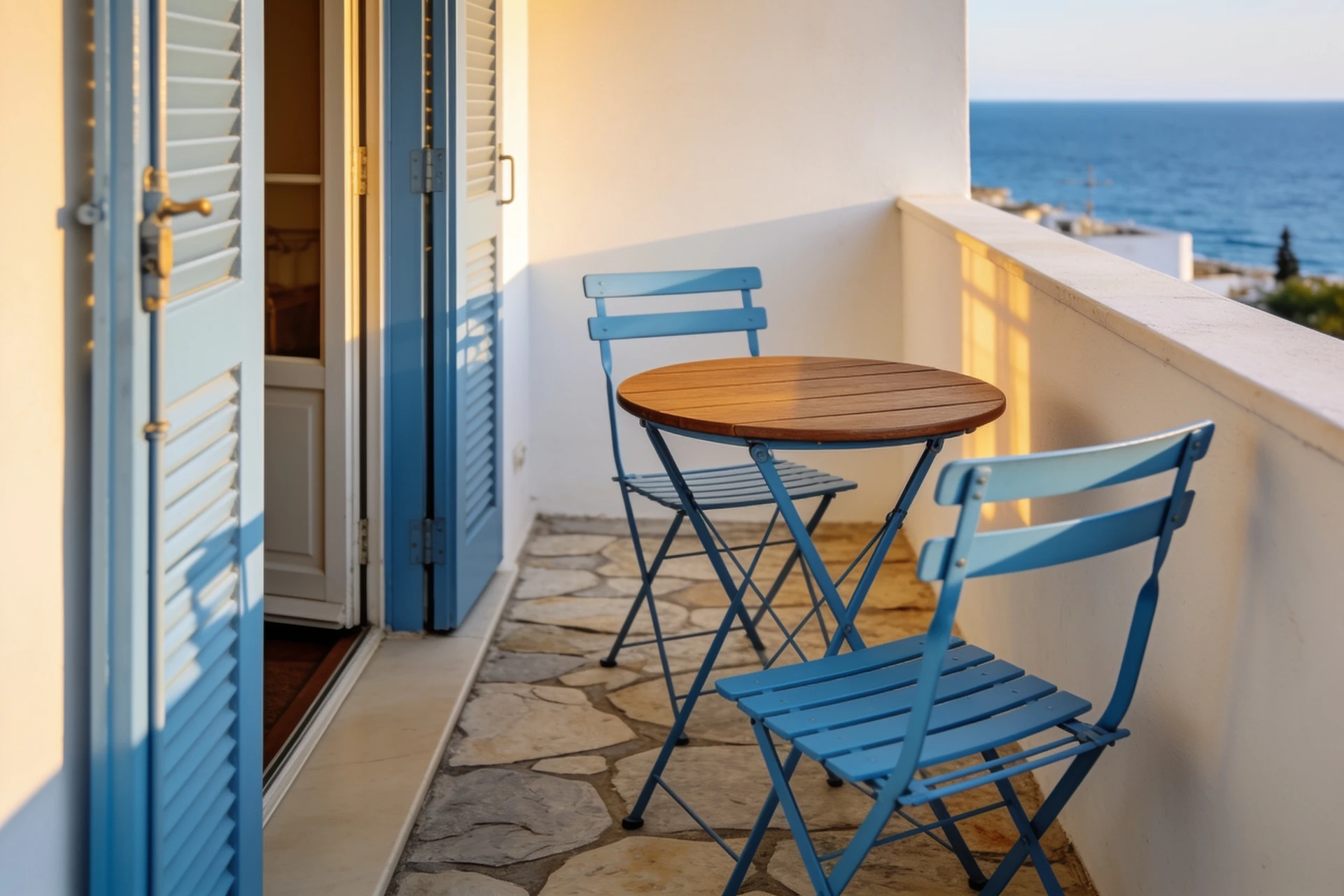
Outdoor furniture has to fit both the balcony and the way the household looks after it. A compact set may still block the door when occupied, while folding furniture can become inconvenient if there is nowhere to store it. Compare the complete everyday arrangement and the conditions it will face before choosing a coordinated set.
At a glance: Test chairs occupied, keep access and drainage clear, and check the exact product's exposure and care requirements. Plan where cushions and movable pieces go during absence or unsuitable weather.
Choose the main use before the set
Decide whether the space is mainly for meals, reading or occasional conversation. List the number of people who normally use it and the surfaces they need. A lounge chair may be more valuable than a dining set if the balcony is usually used alone with a book.
Compare buying individual pieces with a matched set. A package can include more furniture than the space needs. Mark the actual footprint and consider the route from indoors. The aim is an arrangement that supports an ordinary evening, not the maximum number of items that can be placed on the floor.
Test furniture with people in it
Sit, stand and walk past the proposed chairs. Include table legs, armrests and any reclining position. Check the balcony door and access to plants or equipment. Furniture that fits when pushed against a wall may become an obstruction the moment someone uses it.
For a narrow balcony, compare different orientations before changing product size. A small side table can sometimes serve the main routine more comfortably than a central table. Use borrowed furniture or a temporary outline to understand the arrangement before relying on catalogue dimensions alone.
Check the actual exposure requirements
Describe sun, rain, wind and any coastal conditions to the supplier. Ask for suitability and care information for the exact material and finish, including frames, joints and hardware. A broad outdoor label does not explain every limitation of a product in every location.
Ask how movable furniture should be managed during adverse conditions and long absences. Do not assume that weight alone makes a piece secure. Follow the manufacturer's instructions and obtain any necessary assessment for the balcony or proposed installation. Keep loose items within a practical storage plan.
Make folding and stacking genuinely useful
Operate the mechanism and check the stored dimensions, not just the dimensions in use. Identify the actual storage location and whether the item can be moved there comfortably. A folding chair that remains permanently open may offer little benefit over a more comfortable fixed option.
If pieces stack, confirm how they should be stacked and protected according to the instructions. Consider the weight and handling required by the person who will do it. A flexible arrangement should be easy to change without creating an unstable pile or blocking an indoor route.
Compare cushions and cleaning
Read the care and storage instructions for textiles and removable parts. Ask how they are dried, cleaned and replaced, and whether covers are sold separately. Plan a suitable place for cushions when they cannot remain outdoors. Their storage volume can be a significant part of the purchase.
View finishes beside the existing balcony floor and railings. Limit the number of different care routines where possible. This article provides selection criteria rather than product testing; seek supplier evidence for claims about durability or performance that influence your choice.
Confirm delivery and review after use
Check packaged dimensions and the route through the building and apartment. Confirm assembly, disposal of packaging and any installation requirements. Retain product details and warranty information. Inspect joints, movement and the agreed finish on delivery before accepting an unexplained difference from the order.
Use the essentials for a while before adding accessories. Notice whether you can clean the floor, reach drains and move through the door easily. Adjust the specific inconvenience. The strongest balcony arrangement is one that remains usable and manageable across the year, not only in its first carefully arranged photograph.
Compare the whole ownership routine
| Feature | In use | Between uses |
|---|---|---|
| Chair | Comfort and movement | Storage or protection |
| Table | Surface and leg clearance | Cleaning and access |
| Cushions | Support and fabric feel | Drying and storage |
| Folding mechanism | Easy operation | Stored size and handling |
Frequently asked questions
Is folding furniture always best for a small balcony?
Only when the stored arrangement is genuinely convenient. Test operation, storage dimensions and handling as well as the open footprint.
Can outdoor cushions stay outside all year?
Follow the exact product's instructions. Do not assume every outdoor textile has the same exposure and storage requirements.
Should I buy a full matching set?
Compare the pieces you actually need. A smaller coordinated selection can leave more useful space than a package containing extra chairs or tables.
Your practical checklist
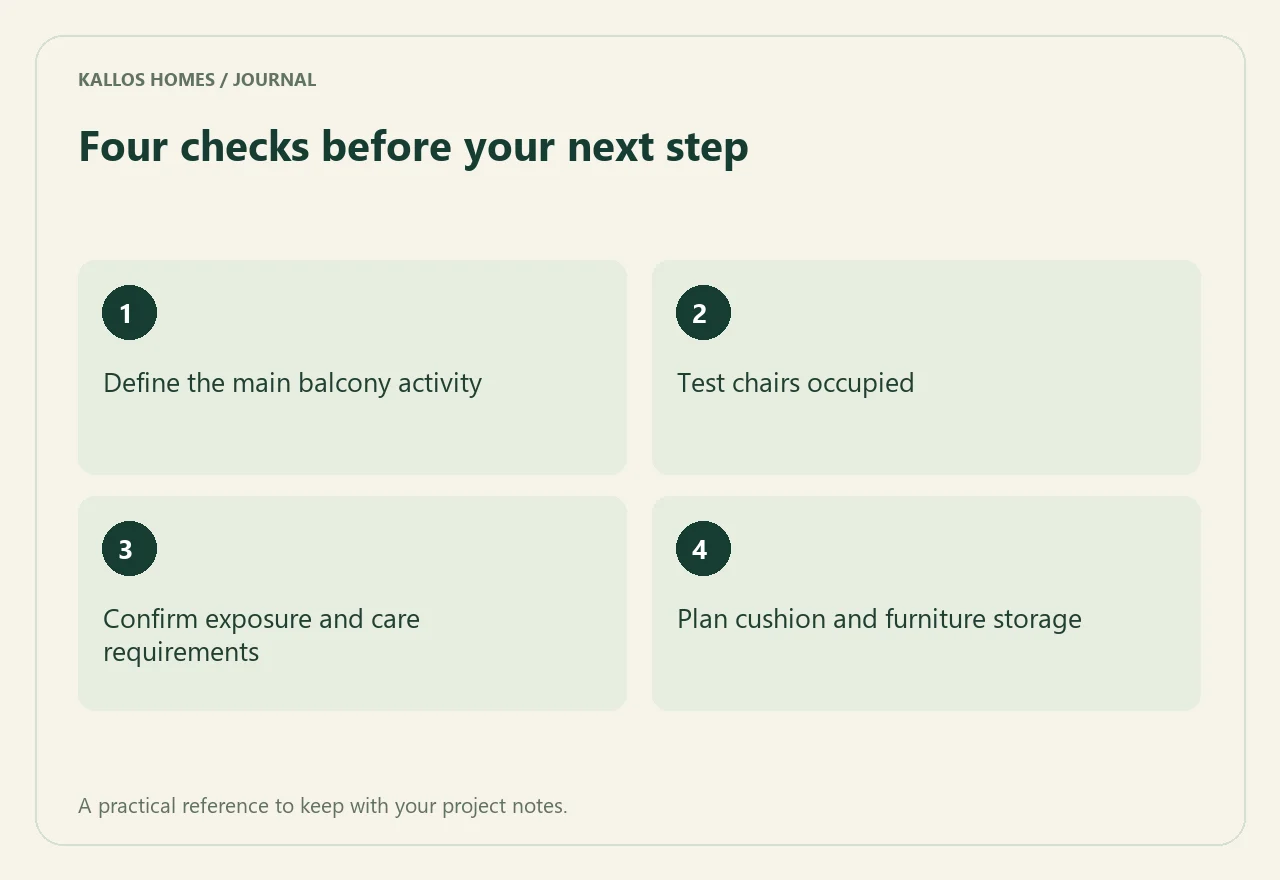
- Define the main balcony activity
- Test chairs occupied
- Confirm exposure and care requirements
- Plan cushion and furniture storage