Outdoor living
Materials for a coastal Greek home: ask about exposure
Choose coastal-home finishes by actual exposure, product specifications, maintenance access and the way the property is used between visits.

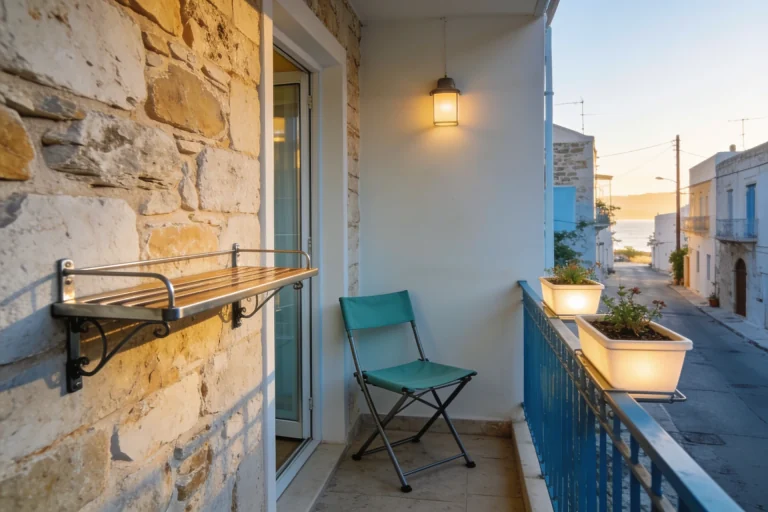
A sea view is a design asset, but it is not a material specification. A sheltered inland room and an exposed seafront terrace experience very different conditions. Before choosing finishes for a coastal Greek home, describe the location, exposure and maintenance arrangements to the supplier.
At a glance: Specify materials for the home's actual coastal exposure and maintenance arrangements. Ask about complete assemblies, compatible fixings, replacement parts and the care required during absences.
Specify the real environment
Explain whether the material is indoors, sheltered outdoors or directly exposed. Discuss salt-laden air, moisture, wind and sun with the manufacturer or specialist. Ask for suitability and warranty information for that exact use. Do not assume every product described as outdoor is intended for the same environment.
Pay attention to small components
Handles, screws, hinges, brackets and hidden supports can be overlooked when attention goes to the main surface. Ask the installer to specify the complete system and compatible components. A premium-looking panel does not establish the suitability of the fixings behind it. Keep the component schedule with the larger material choices.
Plan cleaning and inspection
Choose details that allow inspection and care without unsafe access. Ask which products and routines the manufacturer recommends, and how damage is repaired. Consider who will carry out maintenance if you live elsewhere. A finish that depends on frequent attention may be inappropriate for a property left empty for long periods.
Design for honest ageing
View weathered examples or ask for realistic information about colour and surface change. Decide whether you welcome a changing appearance or expect a consistent finish. Compare replacement access and availability of parts. The goal is not a supposedly maintenance-free house, but one whose care needs fit its location and your routine.
Describe the exposure accurately
Tell suppliers where the property is, which elements are sheltered and which face the weather. Include whether the home is occupied throughout the year and who performs maintenance. The word coastal is a starting point, not a complete specification for every room, balcony or external component.
Ask the supplier to confirm suitability for the intended location in writing and explain any exclusions. Keep the exact product and finish reference. A recommendation for an indoor room should not silently become a recommendation for an exposed terrace simply because the products look similar.
Review the assembly, including small components
Ask about hinges, handles, screws, connectors and concealed parts as well as the visible surface. The installed result depends on compatible components and correct detailing. Request the manufacturer's installation instructions and identify who checks that the proposed assembly follows them.
Look at edges, joints and places that are difficult to inspect. Ask how the design manages its exposure and how maintenance access is retained. Do not assume an expensive visible finish compensates for an unsuitable fixing or an unresolved junction elsewhere in the system.
Make care a purchase criterion
Compare cleaning methods, inspection needs and any periodic treatment specified for each option. Match those requirements to the person who will actually maintain the home. A finish can be appropriate technically yet inconvenient if the property is visited only occasionally and no local care arrangement exists.
For movable furniture, plan storage or protection according to the product instructions. Ask what happens if the item remains outside during a long absence. Keep this answer with the warranty conditions so the household understands the required routine before the purchase, not after visible deterioration appears.
Plan for replacement without redesigning everything
Ask whether components can be replaced separately and how the product is identified for future orders. Keep specifications, photographs and supplier contacts in one folder. Availability can change, so record current support terms without presenting them as a permanent guarantee.
Use a restrained set of finishes to make future maintenance manageable. At handover, inspect the details with the installer and record unresolved items. A coastal material plan is strongest when suitability, installation and care are connected, rather than when each purchase is judged independently by its showroom appearance.
Frequently asked questions
Is a product labelled outdoor suitable for every coastal site?
Do not assume so. Ask for confirmation of the exact product's suitability, limitations and maintenance requirements for the proposed exposure.
Should I choose only materials needing no maintenance?
Be cautious with absolute claims. Request the actual care instructions and choose a routine the household or caretaker can reliably follow.
Your practical checklist
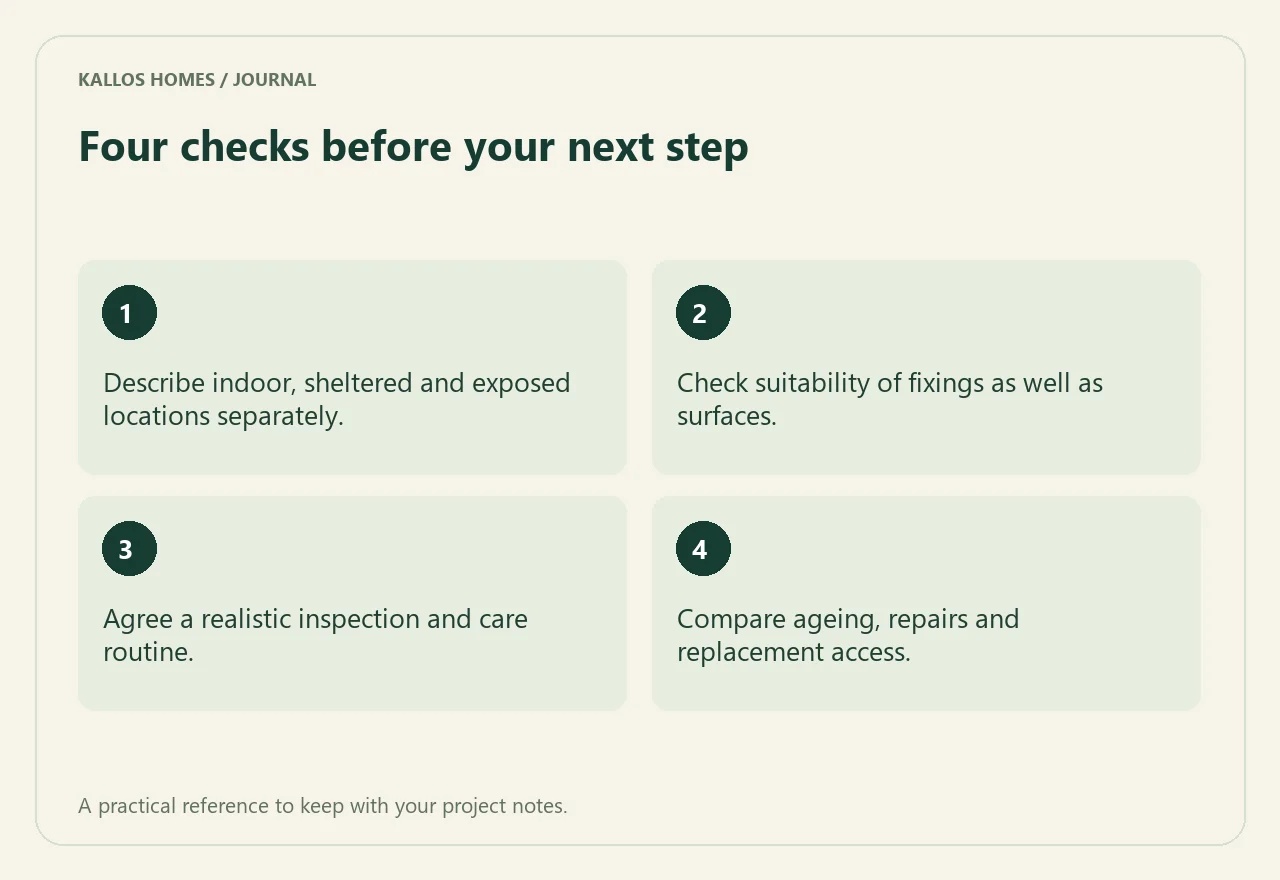
- Describe indoor, sheltered and exposed locations separately.
- Check suitability of fixings as well as surfaces.
- Agree a realistic inspection and care routine.
- Compare ageing, repairs and replacement access.