Comfort & efficiency
Draughts and ventilation are different problems
Prepare a balanced comfort upgrade by distinguishing unwanted air leakage from deliberate ventilation and checking the home as a complete system.

A cold movement of air near a window can make an otherwise attractive room uncomfortable. But sealing every visible opening is not a sound ventilation plan. The useful question is how to reduce unwanted leakage while keeping the air supply and extraction that the home and its equipment require.
Describe where discomfort occurs
Note the room, weather, window position and whether the sensation changes when equipment runs. Check visible seals and operating hardware without dismantling safety-critical components. Record condensation and recurring odours as separate observations. Ask a suitable professional to distinguish leakage, cold surfaces and ventilation-related issues.
Avoid blocking deliberate openings
Do not cover designed vents, appliance air supplies or extraction paths to stop a draught. If combustion appliances are present, discuss ventilation and safety with the appropriate qualified technician. Comfort improvements must preserve the requirements of the installed systems. A product marketed as a simple seal is not automatically appropriate at every opening.
Coordinate upgrades
A whole-home assessment considers the envelope and systems together. When replacing windows or adding insulation, ask how fresh air, kitchen extraction and bathroom ventilation will work afterwards. Include operation and maintenance in the design brief. A quiet fan or accessible filter can make a planned system easier to use consistently.
Verify the result
Agree what will be checked after the work: operation, visible defects and the original discomfort. Keep a record of settings and instructions. If moisture or odours persist, investigate rather than applying another layer of sealant. This guide helps frame an assessment; it is not a specification for altering ventilation equipment.
Your practical checklist
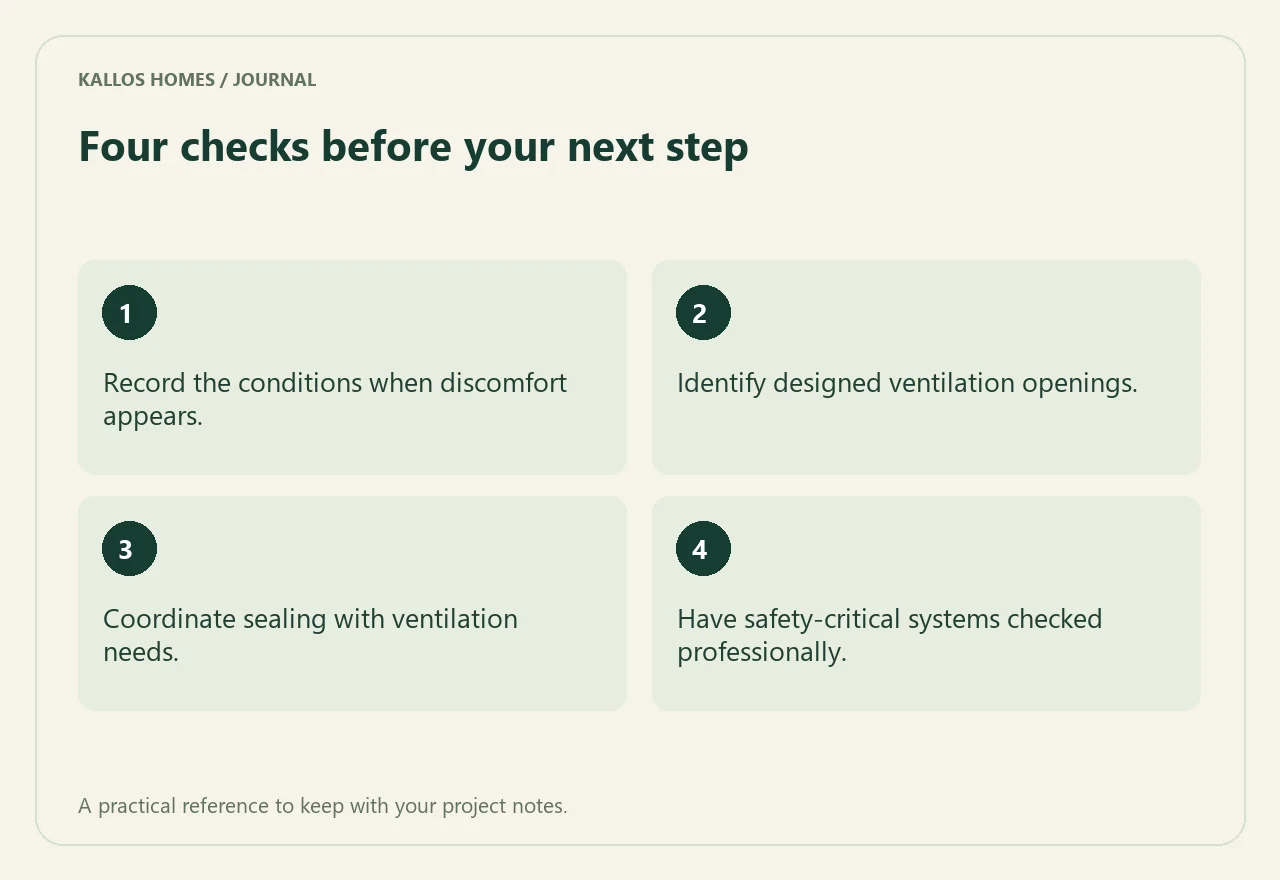
- Record the conditions when discomfort appears.
- Identify designed ventilation openings.
- Coordinate sealing with ventilation needs.
- Have safety-critical systems checked professionally.